Why This Matters
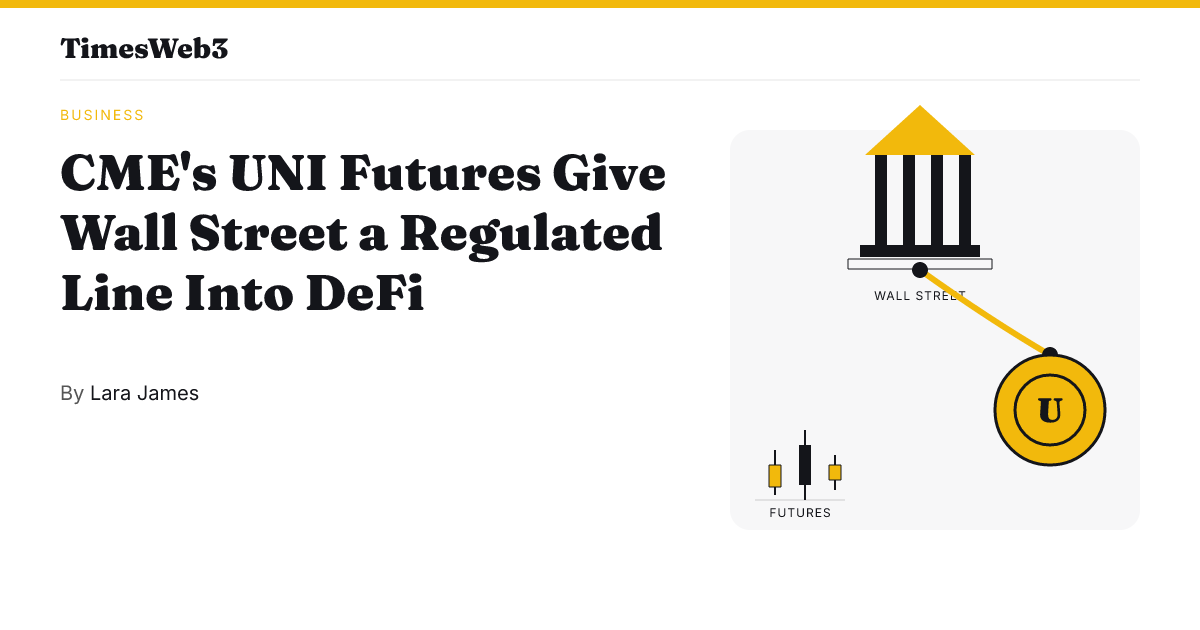
Institutional trading desks that were shut out of decentralized finance because it lacked a regulated venue now have one. CME Group’s decision to list Uniswap (UNI) futures opens a CFTC-overseen channel for funds to take positions on a DeFi governance token without touching the underlying protocol, a first for the exchange and for the DeFi sector broadly.
The listing also lands in the middle of a fight between CME and its own regulator. The exchange is expanding its crypto book even as it disputes the CFTC’s authority over how perpetual contracts are policed, a tension that shapes how far CME can push into new token categories next.
Key Takeaways
- CME Group launched UNI futures on Oct. 19, 2026, making Uniswap the first DeFi protocol token with a listed futures contract on the exchange, according to CoinEdition and PANews.
- The contracts come in two sizes, a standard 10,000 UNI contract and a micro 1,000 UNI contract, both cash-settled against the CME CF Uniswap-Dollar Reference Rate with 24/7 access via CME Globex, per Crypto Briefing and TokenPost.
- UNI spiked 15-19% to roughly $10.43 to $10.90 when CME first announced the contracts on Sept. 22, then retraced to the $7.30 to $7.50 range before trading actually began, Crypto Briefing reported.
- Open interest in UNI-related derivatives topped $1 billion around the announcement period, with whale accumulation of the token picking up alongside it.
- CME listed Bitcoin Cash (BCH) futures a day earlier, on Oct. 19, with standard contracts covering 250 BCH and micro contracts covering 25 BCH.
Two Contracts, One Settlement Price
CME built the UNI listing around a standard and a micro contract, giving institutions a choice between a full-sized hedge and a smaller position for testing exposure. The standard contract covers 10,000 UNI, while the micro version covers 1,000 UNI, according to Crypto Briefing and confirmed by TokenPost.
Both contracts settle in cash against the CME CF Uniswap-Dollar Reference Rate rather than delivering actual UNI tokens. That design means no fund has to touch a DeFi wallet or custody arrangement to take the trade, which is the main barrier CME is removing for institutions that can only operate on regulated venues. The contracts also trade around the clock on CME Globex, matching the always-on nature of the spot crypto market the benchmark tracks.
CME paired the UNI launch with Bitcoin Cash futures, listing BCH a day earlier on Oct. 19. Standard BCH contracts cover 250 BCH, with micro contracts covering 25 BCH, per TokenPost. CME first announced both products together on Sept. 22, giving institutions roughly four weeks to set up accounts, risk systems and compliance sign-off before trading opened, Crypto Briefing reported.
Money Moved Before the Contracts Did
The announcement itself moved the market well ahead of launch day. UNI jumped 15% to 19% on the Sept. 22 news, trading as high as $10.43 to $10.90, before giving back most of that gain to settle in the $7.30 to $7.50 range by the time contracts actually went live, according to Crypto Briefing. That round trip shows a CME listing announcement can pull forward speculative buying without guaranteeing the price holds once the news is priced in.
Positioning data points to real institutional interest building underneath that price swing. Open interest in UNI-related derivatives rose past $1 billion around the announcement window, and whale wallets accumulated UNI over the same stretch, Crypto Briefing reported. TokenPost cautioned that the listing itself does not establish trading volume or demand for either UNI or BCH once contracts are live, a distinction between anticipation and actual flow that will only be settled by how the contracts trade going forward.
CME’s Bigger Crypto Push, Under Regulatory Strain
UNI futures extend a buildout CME has been running well beyond Bitcoin and Ether. The exchange’s crypto futures and options averaged 279,800 contracts a day in the first half of 2026, representing about $8.3 billion in daily notional value, according to Crypto Briefing. Adding a DeFi governance token and a Bitcoin fork to that lineup signals CME sees institutional demand for regulated altcoin hedging tools beyond the two largest crypto assets.
That expansion is happening while CME is locked in a dispute with the CFTC. The agency filed a brief last week arguing CME lacks standing to sue over its perpetual contract policy, and it pointed out that CME’s own crypto futures volume rose rather than fell after the CFTC’s rule change, according to CoinEdition. The CFTC’s framing suggests the regulator sees little commercial harm from the policy CME is contesting, even as CME keeps adding new crypto products under that same regulatory umbrella.
What to Watch
CME is set to report third-quarter earnings on Wednesday before U.S. markets open, with an investor call to follow, according to TokenPost. That release will be the first chance to see whether the exchange’s expanding crypto derivatives lineup, now including UNI and BCH, is showing up in its reported trading volumes and notional value. How actual UNI futures volume and open interest evolve from here, against the backdrop of the unresolved CFTC dispute, will determine whether this listing becomes a template for other DeFi tokens or stays a one-off test case.
Sources
- CoinEdition: 24 Hour Crypto Recap: Here’s What Happened in the Market
- Crypto Briefing: Uniswap becomes first DeFi token with futures on CME Group
- TokenPost: CME Lists Bitcoin Cash and Uniswap Futures as U.S. Data Week Begins
- PANews: CME Group UNI futures officially launch, making UNI the first DeFi token with futures on the platform